
Frank Bodmann

Founder - Strategist - Dreamer.

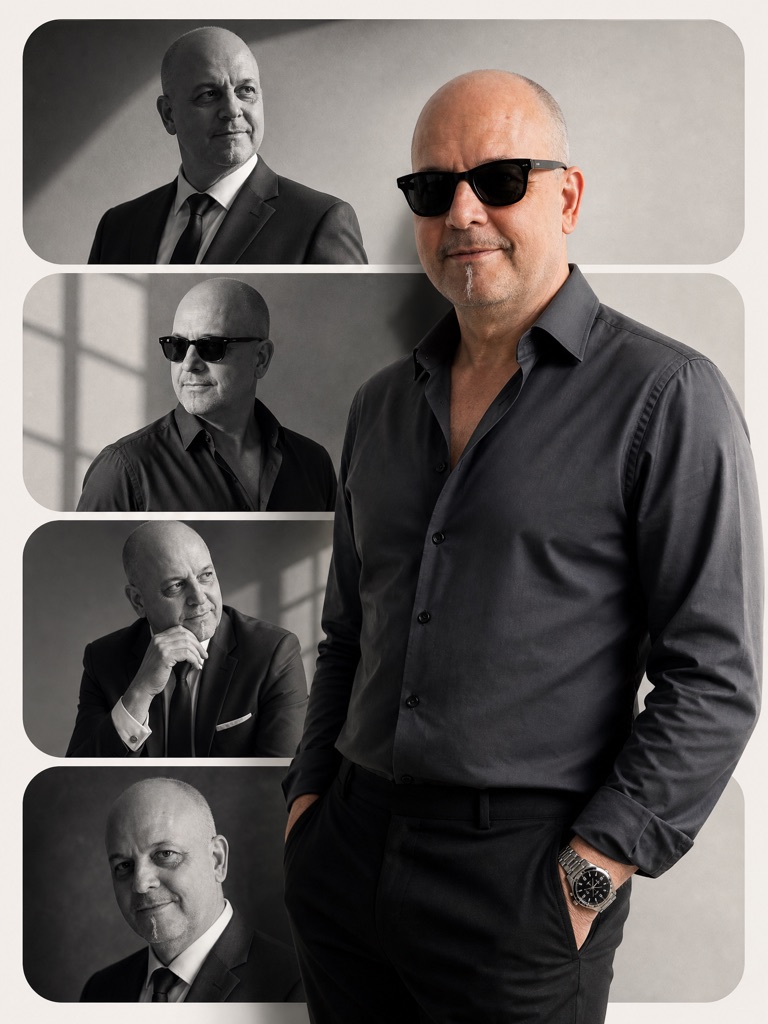
Portrait collage of Frank Bodmann in dark formalwear, including black-and-white studio portraits.

About Frank

Frank Bodmann’s public work chronology does something unusual: the dates advance while the job titles become less dignified. Cooking is not the plot; the lasting habit is: look closely, answer directly, correct the record.

More about FrankShow less

It begins in 1981 at the Ratskeller in Hann. Münden with . A Steigenberger stint as Halbkoch follows. Then Berlin: . From 2007, Thailand added project management and general management at Niramaya, followed by and .

When a Rice Paddy reviewer published price claims Frank disputed, his reply did more than challenge the figures. It also covered mosquito spray, frogs in the rice field, guppies used against larvae and, for good measure, the fact that the roof was palm leaf rather than bamboo. A guest later wrote that Frank’s replies had helped draw his family to Rice Paddy. They returned three times. Customer service had become part of the menu.

How StoryGate came to be

His first attempts to make restaurant stories and additional information available digitally were cumbersome: scan a QR code, open the restaurant website, find the right page and meet a block of text. Behind it, Frank had to maintain an awkward database. The information was there. The elegance was not.

More about the road to StoryGateShow less

describes dishes opening into stories about the hands that planted the rice, markets where spices were traded and the preferences of the person sitting at the table. Frank wanted some of that depth to remain available beyond a conversation at the table.

was a separate project—and almost the opposite. Frank’s pirate treasure-hunt adventure unfolded at original locations. Guests crossed the real landscape; nature remained a participant rather than scenery. Blackbone was not StoryGate wearing an eyepatch. It was Blackbone. Its vulnerability was physical: props were damaged or disappeared. Then the pandemic stopped the tour, and much of its physical layer was gone.

At Blackbone, the treasure hunt was the point. On the restaurant website, it was a usability defect. Blackbone asked too much of physical props. The restaurant experiment asked too much of both guest and caretaker. Much later, these opposite limits sharpened the question StoryGate now tests: how can a story meet a place, an object or a moment without replacing reality with a screen—or forcing the storyteller to maintain the machinery behind it?

The common thread

remains Frank’s working answer, not a finished one. It is still in development and being tested.

More about the common threadShow less

Its aim is to give very different material—a dish, an island memory, an adventure—a shared structure without flattening it. Its rule is simple: platform, app and machinery should disappear; content, experience and usability stay in front. StoryGate shares Frank’s workbench with LumenAI, ReStock, MaBeBo and assorted smaller experiments—“,” as he put it.

On heavy days, his “staff” is a changing crew of . They research, structure, challenge, code and verify; the crew changes, but responsibility does not. Frank keeps direction, judgment and final responsibility for what becomes real.

The most revealing workflow is also the least glamorous: he talks, doubles back, adds one more thing and occasionally loses the thread. AI turns the material into something usable instead of forcing him to become a database caretaker. This biography is being made that way too. Frank supplied the lived material, detours included. The machinery’s job was to find the thread—not replace the man holding the other end. That bit of chaos in between still comes from human hands.

Sources & further down the rabbit hole